Living Room Area Rug Size Guide to Layout, Dimensions, and Placements
 By Olivia Blaze
•
April 21, 2026
By Olivia Blaze
•
April 21, 2026
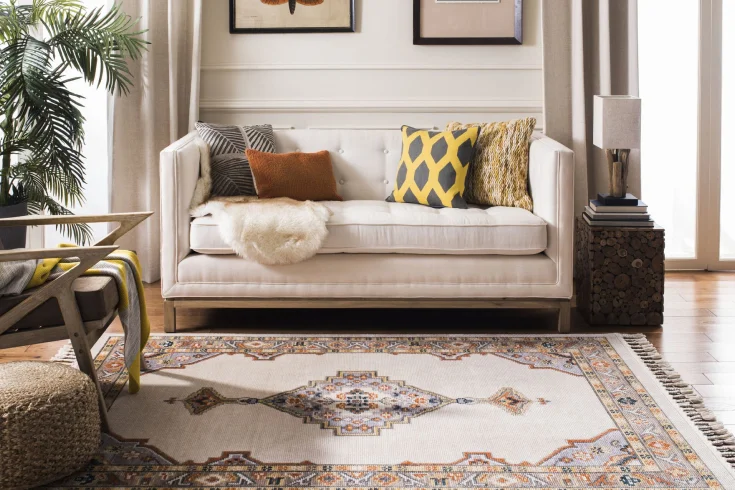
Rugs are not only a floor covering that frames a space but also a statement piece that highlights the zone where they are incorporated. A well choosen rug can be the design foundation that brings sophistication, warmth, and balance into every room. With standard measurements, thoughtful placement, and custom living room layouts, shapes, and designs, interiors can be transformed with elegance and practicality.
For a refined living room design and improvement, it is necessary to frame a living room, anchor it with furniture, and add comfort to the interiors. And undoubtedly, selecting the wrong scale can disrupt harmony and sense of proportion. We are here to help you with thoughtful rug positioning, how a room functions, and how a rug shapes a room through standard proportion chart ideas.
Why Living Room Area Rug Size Matters and How it Impacts the Space
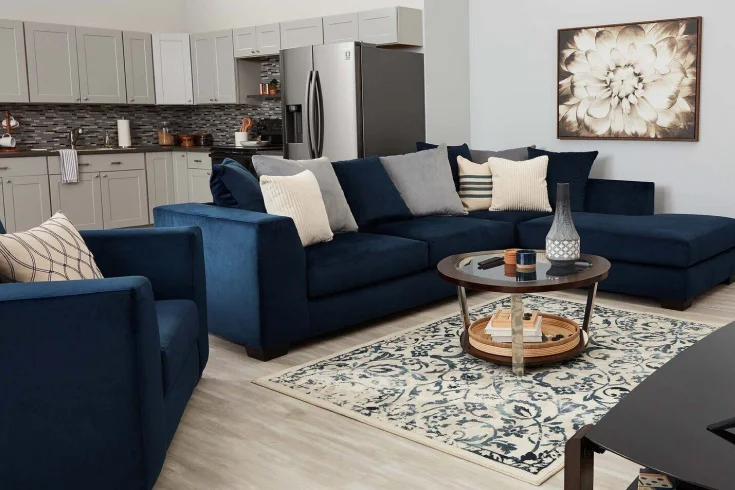
A rug’s size is a critical interior design element, as it helps shape the room, define seating zones, anchor furniture, and bring harmony. A properly sized and well chosen rug can make even a small space appear larger and more cohesive, and is best for luxury living rooms. A small rug can give an unbalanced look to a space as it feels disconnected from the furniture.
A rug must not be too small or oversized, as it anchors the space and majorly affects the rug proportion living room and space perception. Moreover, size matters due to added comfort, warmth, improved atmosphere, better acoustics, and a high level of energy efficiency for cozy living room decor. For a just-right look, be sure to extend the rug to the front legs of major furniture pieces.
How to Measure Your Living Room for a Rug
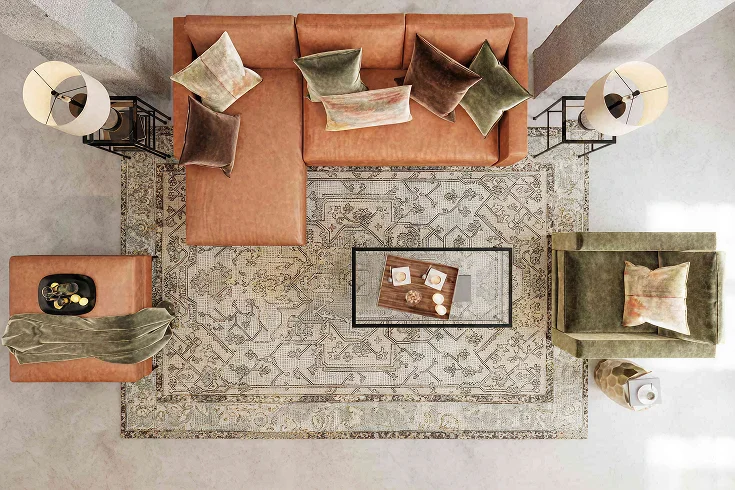
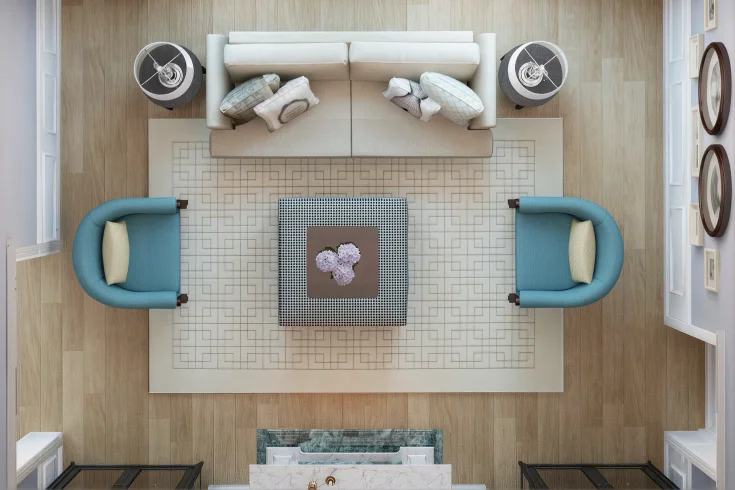
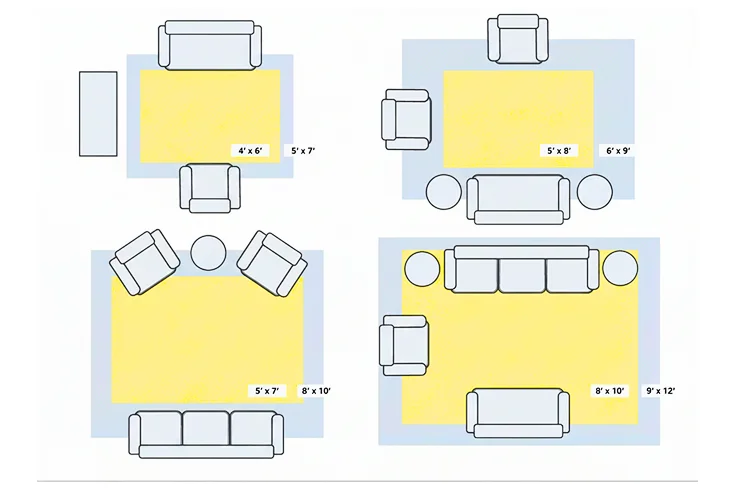
Curious how to measure for a living room area rug size? Begin by defining the seating area by measuring furniture rather than the whole room. Typically, aim for an 8×10 or 9×12 foot rug that keeps front furniture legs resting on it. Leave 8 to 24 inches of bare floor between walls and rugs, using painter’s tape to visualize the ideal placement.
Check furniture placement rules like all legs on, front legs on, and no legs on (floating design). In addition to that, maintain walkways, consider rug to wall clearance, rug pile direction, and rug pad sizing down. Decide on the orientation based on the room scenarios, like large, medium, and small rooms.
Standard Rug Sizes Guide | What’s Available and What It Means
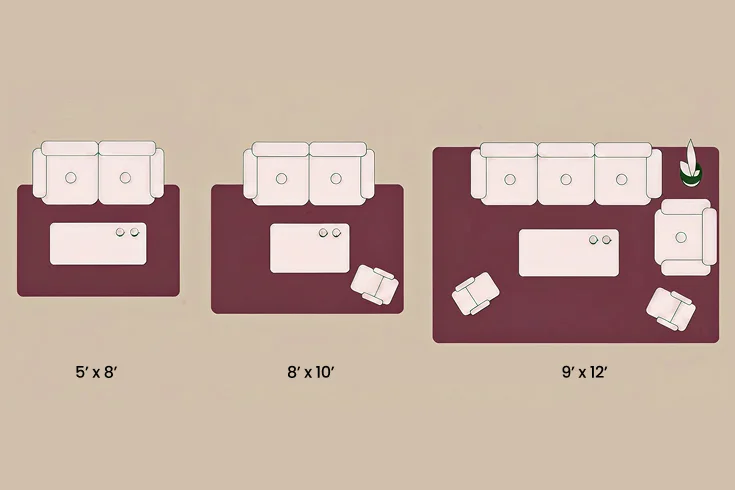
Standard rug sizes provide a reliable structure to anchor furniture and define spaces within a home. Choosing the right size for a rug seamlessly connects the entire space to furniture and seating zones while leaving at least a 12 to 18 inch border that displays the space around the room edges.
Rug Size Guide by Room Type
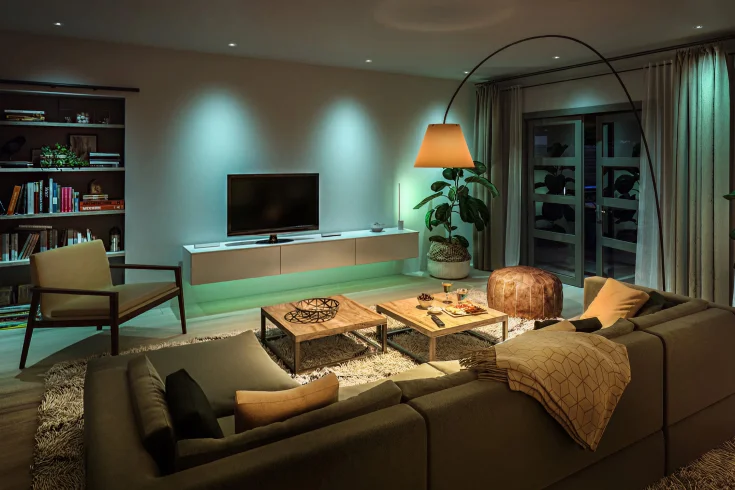
- A 5 x 8 size is best for small rooms in which the rug fits only under the coffee table or with the front legs of chairs.
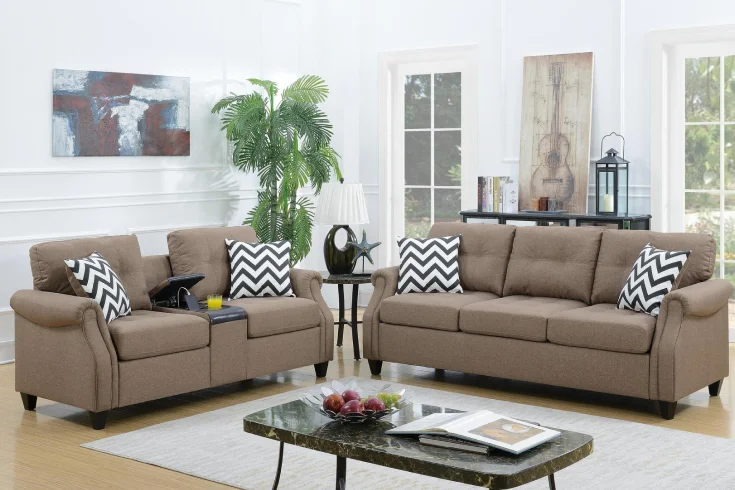
- An 8 x 10 is the versatile, standard size for medium rooms. It fits the front legs of the living room sofa and chairs.
- 9 x 12 or larger is ideal for large living rooms. It ensures all furniture legs can rest on the rug.
Area Rug Size Chart Living Room
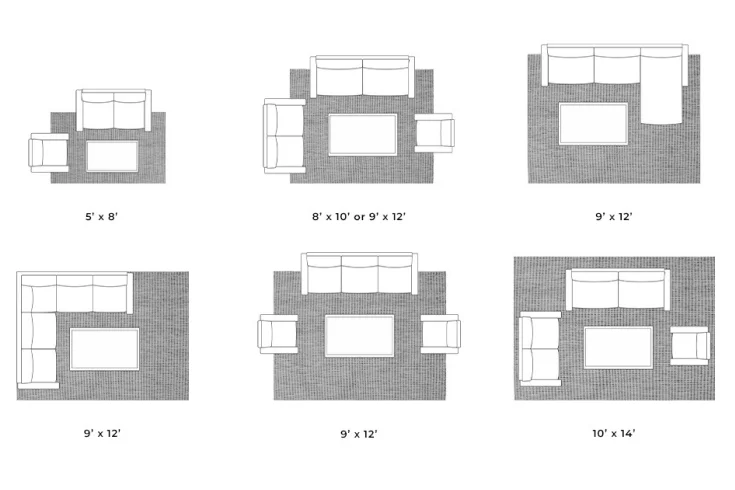
Picking the right area rug size is essential for anchoring your contemporary to minimal living room furniture and making a space feel cohesive rather than detached. Other than standard living area rug sizes, the chart for all room types is mentioned below.
| Room Size | Recommended Rug Size | Best Furniture Layout | Rug Placement Style |
| Small (10 x 12) | 5 x 8 or 6 x 9 | Only the front legs of the sofas are on the rug. | Fully off or rug size with front legs only |
| Medium (12 x 15) | 8 x 10 | Front legs of all seating furniture on the rug | Front legs of the sofa and the side coffee table |
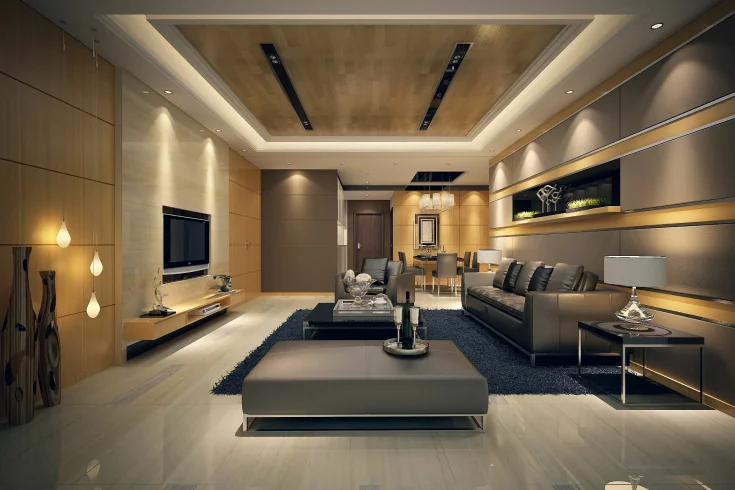
| Large (15 x 18) | 9 x 12 or 10 x 14 | All furniture legs sit fully on the rug | Most Furniture Sit Over Rug |
| Extra Large (Open Concept) | 12 x 15 or larger | Full room coverage or define a specific space | All Furniture on Rug |
Should All Furniture Legs Be on the Rug?
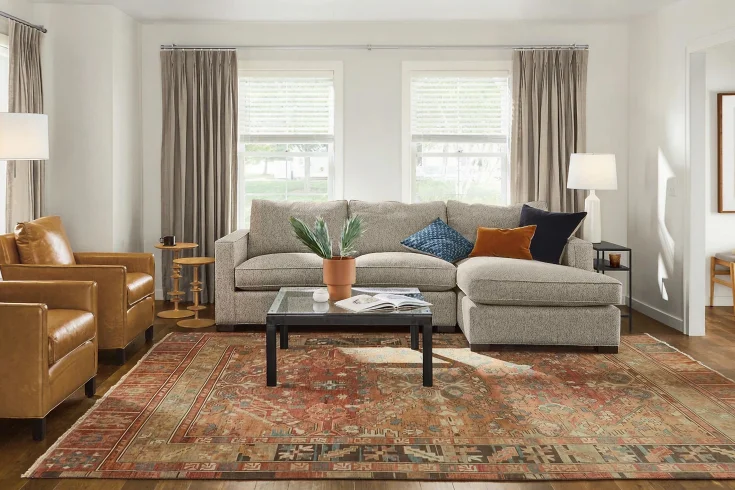
While all furniture legs on rugs is a great idea to create a cohesive and luxurious look, it is not a strict interior design rule. Well, it mainly depends on the dimensions of the room. If it is an open concept room, it would be good to have all the seating elements over the rug to create a spacious and comfortable conversational zone for balanced living room decor. Using this approach, you can make a large space feel connected and luxurious, preventing furniture from feeling disjointed in a vast room.
What Size Rug for a Small Living Room?
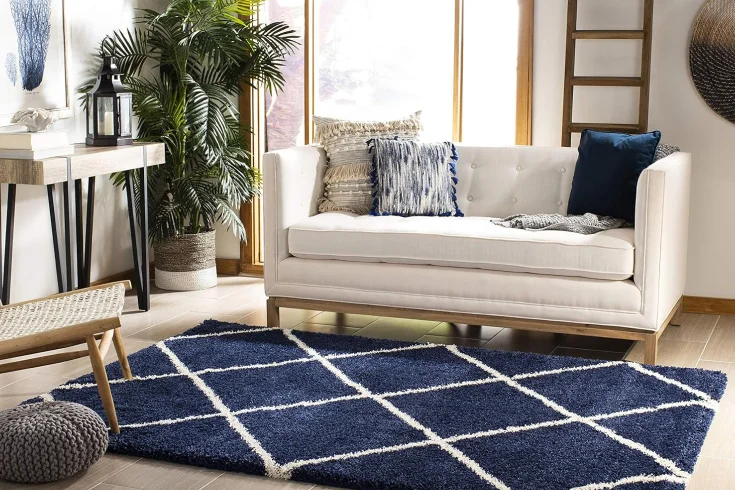
5 x 8 rugs are best for compact or layered spaces that anchor the furniture perfectly without overwhelming the space. 5 x 7 and 6 x 9 are ideal for small living rooms and apartments. No matter what size you pick for your tiny rooms, make sure to leave at least 10 to 13 inches of floor space between the rug and the walls.
What Size Rug for a Large Open-Plan Space?
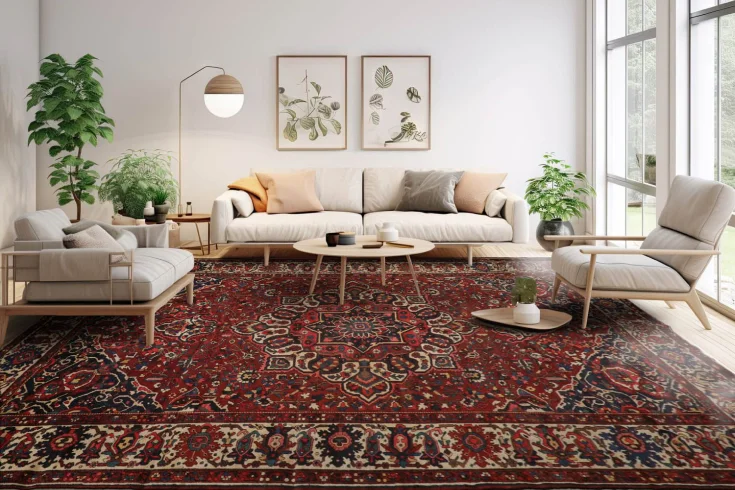
9×12 and larger are designed for expansive rooms that anchor the entire seating area’s furniture perfectly. Other than this, 10×14 is a size large enough to accommodate a rug size with sofa on it. Even if the whole seating set won’t sit over, all the front legs of the furniture can be incorporated for a luxurious and balanced look, preventing a space from appearing scattered.
Rug Size Rules for Layering Two Rugs
When it comes to the rug layering size guide, get one large and the other small. Use a larger one as a neutral base, like jute or sisal, and incorporate a small accent rug to add more color, texture, and comfort. The best rugs for living rooms to be used as accent or throw rugs are natural jute, sisal, and plush or versatile shag and cotton flatweave rugs, luxurious and durable choices for high traffic areas.
How Much Floor Should Show Around a Living Room Area Rug?
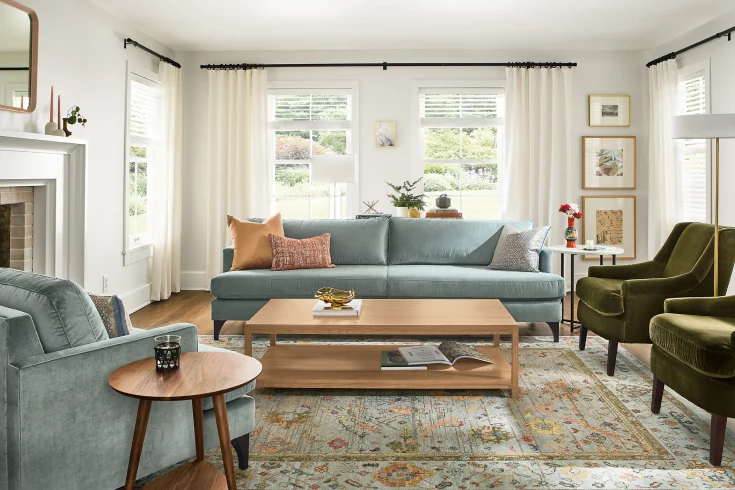
Leaving at least 12 to 18 inches of the floor space is recommended for a standard and balanced living room look. Flooring exposed between rugs and wall edges prevents a space from looking crowded while it ensures the rug still frames the seating area perfectly. If the space is small, a border of 8 to 12 inches is enough to ensure spacing consistency for room edges, walls, and seating arrangement.
If you are going to install living room area rug size carpets, be sure that you are aware of the carpeting material, ventilation, designs, seams, and even cleaning and maintenance.
Most Common Rug Size Mistake in Living Rooms
To get a statement rug size, it is mandatory to avoid these sizing mistakes that either make the room feel floating or cramped due to small or large sizes. Avoid these small rug mistakes given below.
Oversized or Undersized Rugs
Never choose a rug that is too small, as it will make a space look cramped, unbalanced, and disjointed. Also, don’t get an oversized one, as it will give a cluttered, cramped, and unbalanced look.
Know about the gold standard of rug sizing that defines room fit vs area fit, leaving specific inches of floors exposed to prevent wall to wall look.
Front Legs Away from Furniture
Never ignore room dimensions, as when ignored, it won’t leave bare floor space, affect furniture arrangement, and symmetry in rug placement. It won’t keep the sofas or chairs on the rug otherwise. The front legs must be on the edges of your rugs.
Not Maintaining Borders
Designers recommend leaving approximately 8 to 12 inches of bare floor between walls and rugs. As it serves both functional and aesthetic purposes, it must be considered for high traffic places due to extended time and visual frame.
Ignoring Traffic Flow
Don’t ignore the flow of daily traffic that blocks walking paths. Placing a rug that creates tripping hazards must be avoided at all costs to avoid any injuries and protect your safety.
Not Using Painter’s Tape
To outline the potential sizes of rugs on your floors, use tape. The painter’s tape will help you measure the space and visualize the fit before even purchasing it.
Tips on how to maintain a healthy living standard with rugs and carpets installed in your living spaces to prevent health issues like allergies and asthma.
In a Nutshell
Are you wondering how to choose a rug size for large open concept space or an area rug size guide for an apartment living room? Our inspiring guide covers it all by providing you with floor covering ideas for small to large living rooms. Selecting a rug is entirely dependent on the room’s dimensions, furniture layout, and personal choice.
Choose an 8×10 or 9×12 foot rug for standard spaces, a 5×7 for small, an 8×10 for medium, and a 9×12 for large spaces to create a cohesive, balanced, and visually larger space appeal. Before you purchase a living room area rug size, make sure to measure the seating area, look for a standard rug size guide, and aim for the furniture’s front legs on rugs for a balanced style, look, functionality, and aesthetics.