
12 Kitchen Flooring Ideas To Improve Interior Visuals or Value
Kitchen flooring can have the transformational impact that needs to be a major design statement, as well as be durable enough to hold up to everyday use. As the kitchen is notoriously messy, you would want your flooring to be durable, comfortable, and easy to clean so that it can endure heavy traffic. Being the major visual appeal and value factor, flooring must not be an afterthought.
If you’re planning a broader refresh, it helps to align flooring choices with the overall layout and workflow of the space. Reviewing proven kitchen layout ideas first can guide you toward materials and finishes that complement cabinetry placement, traffic flow, and appliance zones, making the flooring decision far more intentional.
Having sophisticated flooring that is equally practical and top of the line in terms of visuals makes all the difference. No matter if it’s a simple floor replacement or a whole kitchen renovation, you can go for a remodel cost effectively. Flooring selection is entirely dependent on decor styles, lifestyle, space dimensions, and budget.
12 Kitchen Flooring Ideas That Are Stylish and Functional
Flooring is an investment, so choose what lasts long while beautifying your space. Getting the right flooring for your kitchenettes is crucial not only to maintain the aesthetics but withstand the wear and tear in the busy kitchen. Check out our modern to traditional range for kitchen floor ideas in terms of materials, colors, finishes, and styles that work best for your space!
01out of 12Cork Flooring
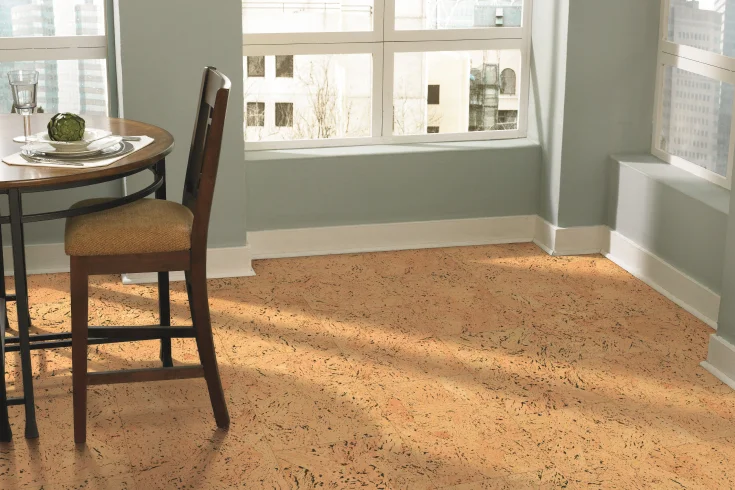
With insulating qualities, insect repellent properties, and a soft feel underfoot, cork flooring stands out as the best choice throughout your home, not just in the kitchen. Being an eco friendly option, it is a natural material that is extracted from the bark of the cork oak tree. Cork kitchen flooring needs to be ground up, compressed, and converted into sheets with proper resin bonding. Amazingly, this option is also moisture and mildew resistant, hence, a completely functional choice. Although it is affordable, environmentally friendly, and durable, it needs proper care because it can be easily damaged. Moreover, it requires sealing after 5 to 7 years to protect against water and other potential damage. It may even discolor over time due to direct sunlight exposure.
02out of 12Porcelain Tiles
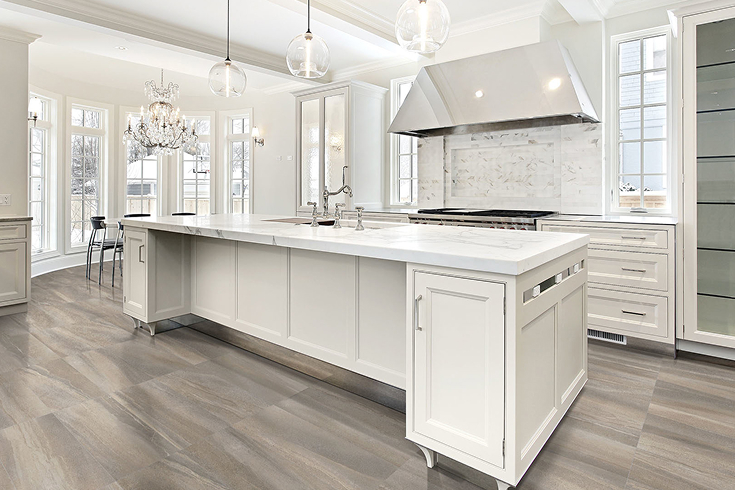
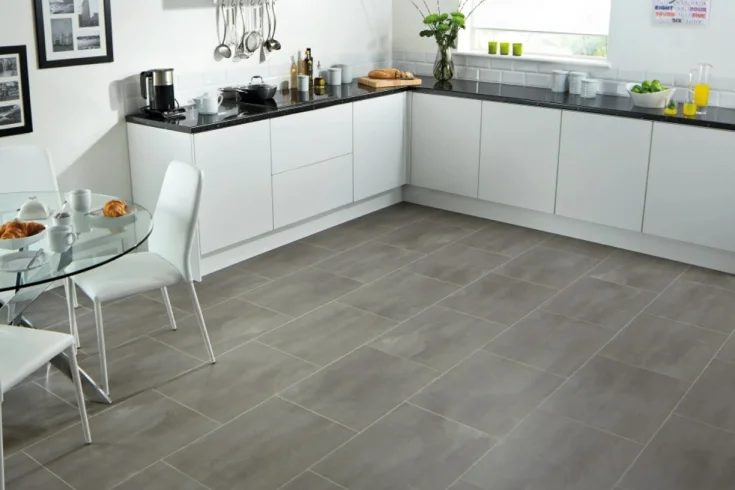
Porcelain kitchen floor tiles are always a go to choice for your cooking rooms due to their strong resistance against high traffic areas. Compared to ceramic, it is a durable choice that can withstand scratches, chips, high traffic, and moisture. You can have this option with a lot of color combos, shapes, gazillion textures, and even finishes to mimic the look of other materials like stone or wood. The best thing about this flooring is that it doesn’t burn due to a non-combustible material. It is the cost effective and long term option compared to cork, hence, it provides the best value for money. Aside from that, if you are considering commercial kitchen flooring, it is the best choice. It might cost you more initially because it needs experts for installation.
Porcelain tiles work especially well in contemporary and transitional kitchens where clean lines and efficiency matter, making them a natural fit alongside modern upgrades featured in modern kitchen ideas.
03out of 12Hardwood Kitchen Flooring
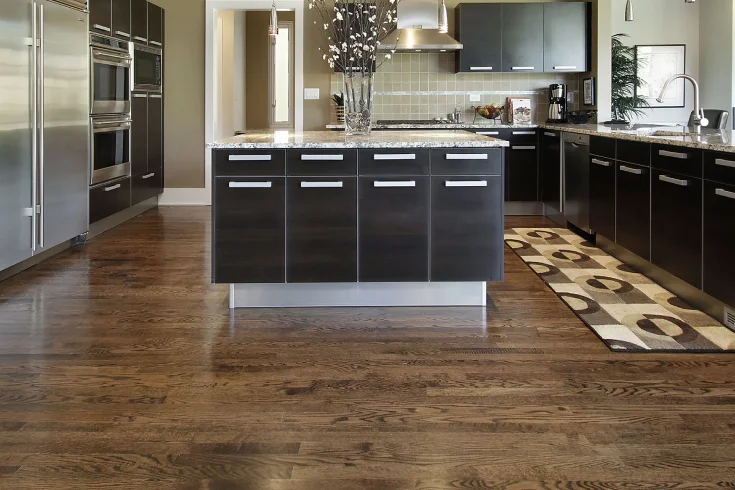
If an inexpensive fix is what you are planning for your next renovation, the most affordable option can be hardwood. Hardwood is renowned for its timeless aesthetics, visual appeal, and high durability. When selecting from the available choices for hardwood floor kitchen, you have maple, oak, ash, walnut, and cherry wood to choose from. Solid and engineered wood is worth the investment because it is a stable choice, not only enduring heavy foot traffic but also temperature and humidity fluctuations. The most intriguing fact is that it adds to the value of your property. However, you must consider the costs, maintenance needs, preventing moisture and spills, and wood type according to your aesthetics and wear and tear needs.
04out of 12Brick Tiles
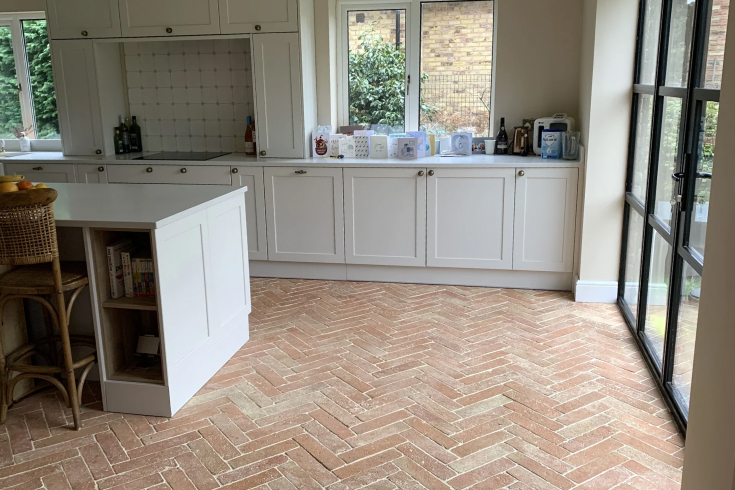
If you are looking for a cost effective and modern flooring with a classic aesthetic, nothing compares to bricks, which are the best tile for kitchen floor. Also known as brick slips, these are thin, lightweight, and replicate the traditional brick look without costing much. Amazingly, you can use them as a decorative cladding for both indoor and outdoor kitchens. Besides a brick floor kitchen, you can install bricks on walls, kitchens, fireplaces, and other wide surfaces in the kitchen to add depth and color to the neutral space. Bricks give the whole space a new build, adding a rustic European style feel and an interesting touch. Talking about the functionality, they are durable, offer heat resistance, and can bear heavy foot traffic.
05out of 12Luxury Vinyl Tile (LVT) Floors
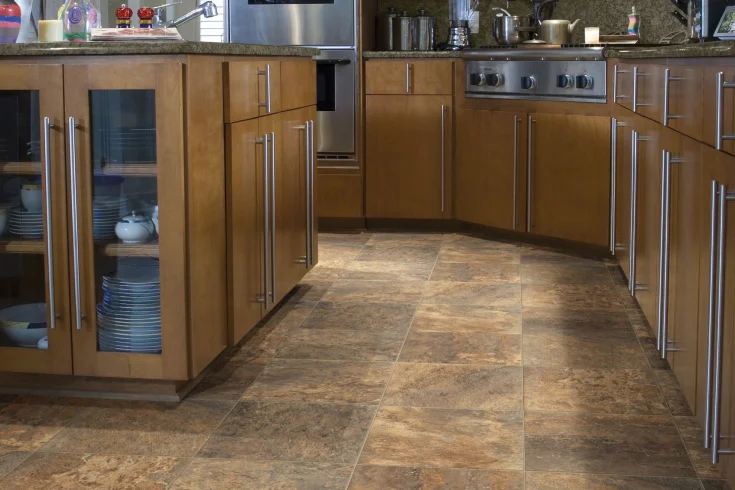
Luxury vinyl flooring in kitchen is an excellent idea not just because of its aesthetics but durability. Manufactured with multiple layers, including wear, printed design, WPC core, and backing layer, contributing to longevity. If you were looking for the best waterproof flooring for kitchen, LVT is a good choice because it resists moisture to a great extent and prevents damage. You can get them in both tiles and planks, with a variety of patterns to choose what fits best with surrounding finishes, colors, and even wood grain patterns. It is the perfect alternative to kitchen linoleum flooring and luxury vinyl plank (LVP) floors, ensuring you get the best and most stable surfaces to walk over. However, they include the risks of scratches from sharp objects.
06out of 12Bamboo Flooring
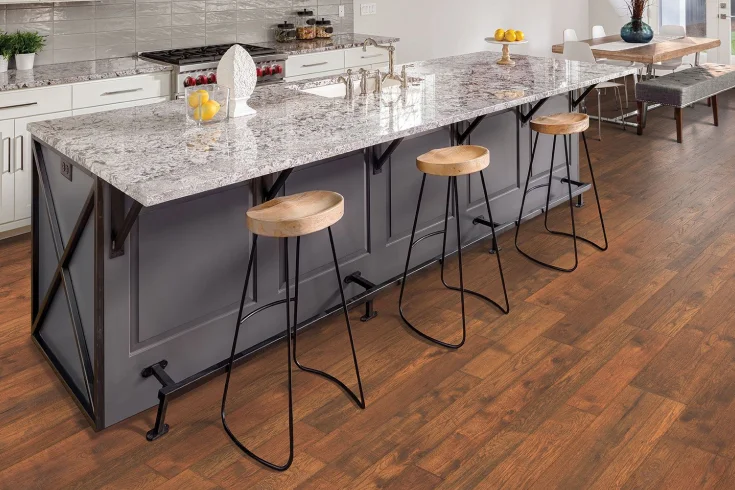
Renovate your floors with cheap and sustainable bamboo flooring that is constructed using the harvested bamboo. The bamboo is boiled, dried, and glued under high pressure to form planks. It is one of the best, unique, and renewable kitchen flooring options that comes with distinct textures, patterns, and finishes. That’s because the final look entirely depends on the processing, as the strips are pressed vertically or horizontally to create the different look. It is an affordable and eco friendly choice that can be refinished to restore the appearance of the damaged floor. However, compared to other floor options, it is not waterproof, which is why it can be damaged by prolonged exposure to water. Moreover, it has aesthetic limitations and is susceptible to dents and scratches, which is why not recommended for owners searching for long term option.
07out of 12Parquet Wood Flooring
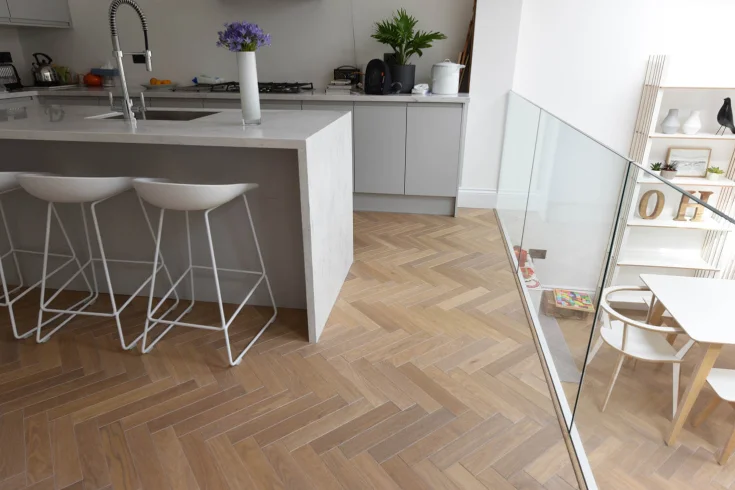
For those who are fond of classics or traditional, parquet flooring is an excellent choice. Featuring a traditional, decorative style, it comes with small wooden pieces that are arranged in a mosaic and geometric patterns on floors. The wooden slats can have different patterns, including basket weave, chevron, and herringbone. These specific patterns repeat continuously when assembled, rather than simply installing long planks. While it offers the benefits of aesthetic elegance and constructive durability, the purchasing cost of these planks is high. However, it is recommended to avoid frequent spills and stains to prevent any damage. Incredibly, this flooring can be refinished and restored through sanding and applying a finish based on the floor’s thickness and condition.
08out of 12Laminate Wood Flooring
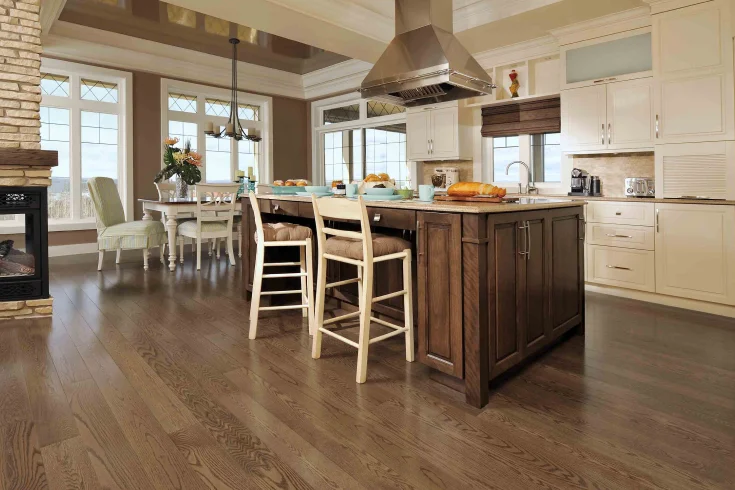
To add a warm aesthetic and mimic the wood like appearance, get laminate flooring installed in your kitchenette. It comes with a rigid, wear resistant top layer that performs well against heavy foot traffic, stains, and scratches. Compared to hardwood and other materials, it is the budget friendly choice. Amazing color variety, like light to dark tones, finishes like embossed, handscraped, and smooth, and mimic choices like stone or tile are available for this flooring. Despite all the amazing features of kitchen laminate flooring, it has a lower resale value, can chip, swell, and give a less authentic feel.
Laminate flooring is often chosen for compact kitchens where budget and ease of installation matter, especially in layouts similar to those highlighted in small kitchen ideas.
09out of 12Ceramic Tiles
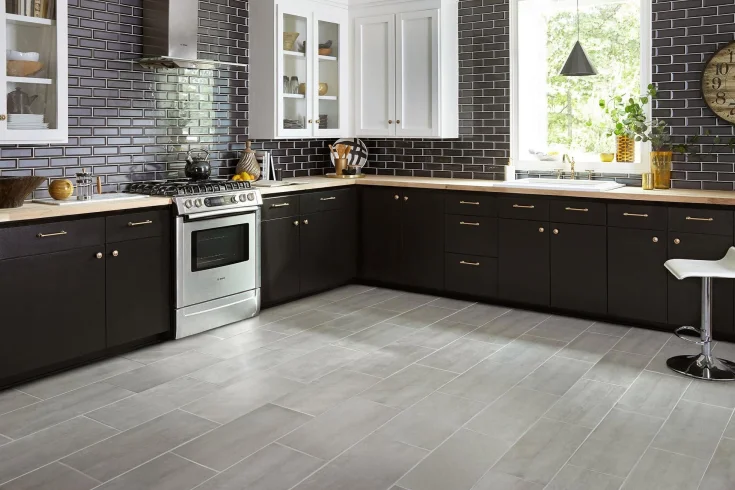
Ceramic tiles are hard, durable, and decorative tiles made from natural materials like sand, water, and clay that are shaped and then fired in a kiln at high temperatures to make the tiles long lasting. Moreover, this kitchen tile flooring is coated with glaze, which can be either matte or glossy to create a decorative and protective surface. Talking about their appearance, it comes in a range of colors, has shapes variety, simple to solid patterns, and ceramic kitchen floor tile designed to mimic the appearance of natural materials like wood and stone, like slate and marble. The main points to have these tiles are versatility, durability, water-resistance, easy cleaning, and affordability.
Ceramic tile remains one of the most recommended kitchen flooring materials due to its durability and versatility, and this overview from Architectural Digest explains how different tile finishes perform in real kitchens.
10out of 12Terrazzo Tiles
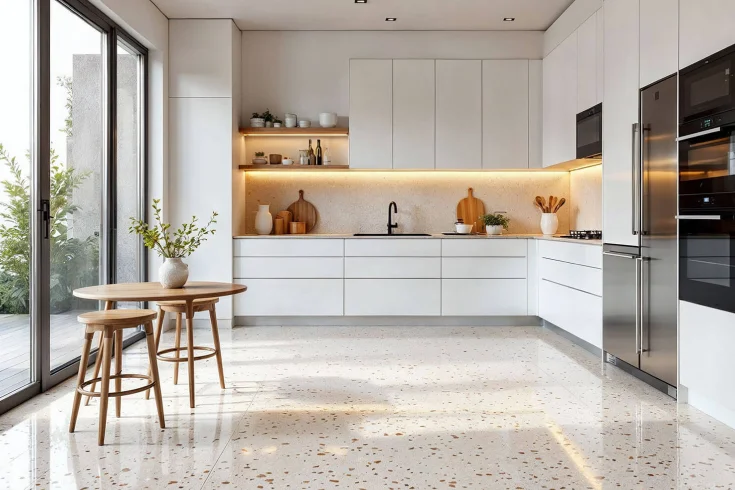
Made from composite materials, combining binding agents with aggregate chips (like glass, granite, and marble), traditionally cement or modernly epoxy resin. After pouring, curing, grinding, and polishing, they create the most durable, smooth, and perfectly decorative surfaces for floors and even walls, and kitchen countertops. Offering versatility, durability, and sustainability, it is the perfect choice for busy kitchens. It has a high initial cost and complex installation, but it’s totally worth it because it can last for long periods. You can choose dark stones for a dark floor kitchen or light ones for an elegant touch.
11out of 12Terra Cotta Tiles
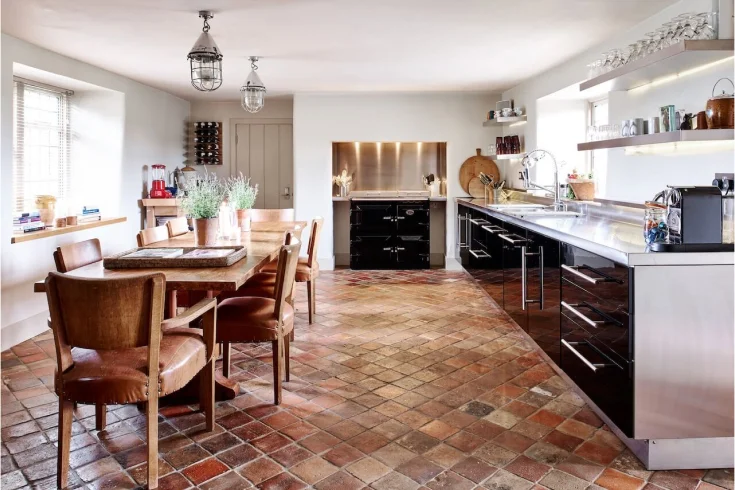
Terracotta is another traditional tiling option that is timeless and renowned due to its unique appeal and earthy finishes. It is suitable for Tuscan-style design, adding contrast with white walls and cabinetry. They are manufactured using natural clay, rich in iron, giving rustic, reddish-brown, or earthy tones. The manufacturing process involves shaping the clay, drying it, and firing it at high temperatures. These tiles are glazed for added durability, gloss, and color variations. Their versatility makes them suitable for a wide range of applications, including flooring (kitchens, patios), roofing, and decorative walls, making them ideal for both indoor and outdoor use. A key property is their underfloor heating, though their natural porosity requires sealing after installation to protect against stains and moisture.
12out of 12Small Kitchen Floor Plans
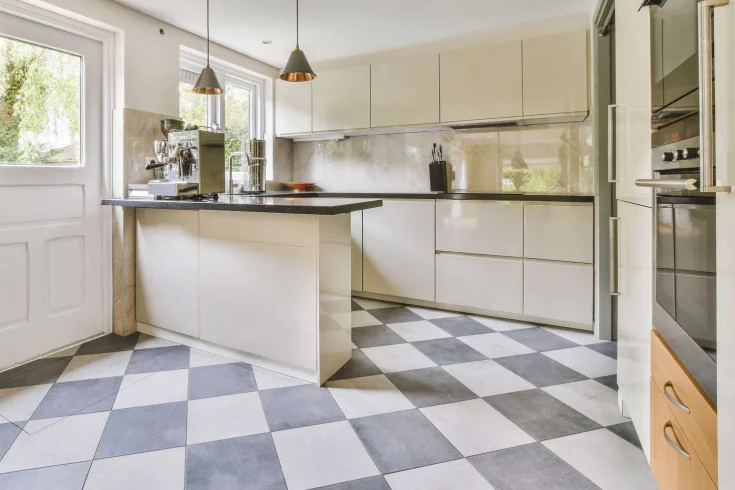
When it comes to small spaces, peel and stick kitchen floor tile, limestone, white marble, polished concrete, vinyl, and epoxy kitchen floor are the most popular choices. Rather than simple kitchen vinyl flooring, you can discover other bold options with distinct patterns, textures, colors, and styles. Moreover, you can switch from traditional wood floors in the kitchen to more durable choices like natural stone. Carefully select the kitchen floor tiles design as it impacts the overall space’s vibe. Another long lasting idea is to install industrial kitchen flooring ideas that offers the best value for money.
If you’re narrowing down materials, reviewing curated kitchen countertop appliance and kitchen layout combinations can help ensure your flooring choice supports how the kitchen is actually used day to day.
To Finalize
Flooring in the kitchen holds practical importance, which is why it is necessary to pick the option that is compatible with the heavy foot traffic, droppings, spills, and daily wear and tear. Not to mention, aesthetics and appearance do impact the overall visual of the space, but you must take into account other factors like how easy it is to clean, maintain, hypoallergenic, and spills, stains, and scratches resistant. Keeping all these noticeable details in consideration, we’ve compiled the best flooring types to set the ideal foundation that suits your style, budget, and practical needs. From modern to traditional options, any floor idea can inspire your next renovation project!
FAQs | Frequently Asked Questions
What Is The Most Durable Flooring For Kitchens In 2026?
For kitchens, the most durable choices are stone plastic composite (SPC), luxury vinyl flooring, and porcelain, which is exceptionally strong, dent resistant, and waterproof; hence, the best choice for high traffic homes.
Which Kitchen Floors Are Easiest To Clean?
Luxury vinyl tile, sealed concrete, ceramic tile, terrazzo, and porcelain are the water and stain resistant options, hence, easier to clean. You can opt for mopping and sweeping, and even for sanitizing.
Is Vinyl Flooring Still a Good Choice In 2026?
Yes! Due to technology advancements, design versatility, amazing functionality, high end durability, water resistance capability, and not to mention, affordability, make it a perfect choice in 2026.
What Flooring Is Best For Small Kitchens?
Marble, luxury vinyl planks, large format tiles, and traditional solid wood flooring are the best choices that give a luxurious touch, ensure durability, and make a space appear spacious.
Can I Use Hardwood Floors In a Kitchen?
Yes! These natural floors add visual appeal, warmth, and value to your kitchen, enhancing the resale value of your property. However, proper selection, maintenance, and care are required against heavy traffic and use.
Which Tiles Are Waterproof and Stain-Resistant?
Glass tiles, glazed ceramic, porcelain, and marble are the waterproof and stain resistant choices for your kitchens, preventing liquids from penetrating. Also, stains can be simply wiped off with a damp cloth.
What Are Eco-Friendly Flooring Options For Kitchens?
Bamboo, Linoleum, Cork, recycled tile, concrete, ceramic, porcelain, and Engineered hardwood flooring are some popular, sustainable, and eco friendly options for kitchens.
How Can I Make My Kitchen Floor Non-Slip?
To keep your floor from slipping, apply anti slip coatings, install slip resistant tiles, or incorporate non slip mats or rugs. Besides, you can try anti slip stickers or treads to create a non slip surface.